PROJECT ON-FARM
TITLE OF THE CASE STUDY
Circular pig farming
MAIN DATA OF THE COMPANY
Name of the Company
Buitengevonevarken
Country
- Nederland
Type of the Company
- Individual company
Farming Activity
- Animal breeding
Direct selling way
- Direct selling in farm
SELF – INTRODUCTION OF THE FARMER
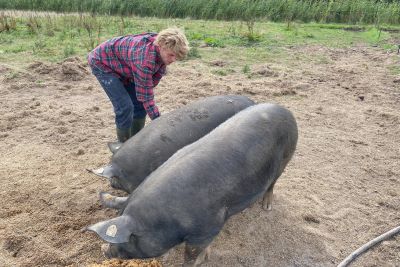
Josse Haarhuis is 24 years old, he is a farmer and entrepreneur. His farm is called Buitengewonevarken, he farms pigs kept outdoors all their life and he sell the meat of about 400 pigs per year directly to restaurants and consumers. The pigs are slaughtered at small slaughterhouse nearby every two weeks and then the meat is given to a local artisanal butcher who transforms it into the final products. The last step of the chain is again in the hands of Josse who delivers the final products to its customers (1 day per week). The farm was started 4 years ago by Josse together with a business partner. He started the business in the last year of his studies and also graduated on it (he studied Animal healthcare and behaviour). He wanted to work with pigs and be an entrepreneur focusing on animal welfare. The farm doesn’t have a bank loan so all profit it makes is currently invested back in the company. The current ambition is to arrive to 500 pigs slaughtered per year. They have 25 different locations where they rent a land (owned by another farm for example) and the pigs spend their life there with a specific goal: education, weeding, etc. When the pigs are big enough, they slaughter them and they give back small piglets to the land owner. They also sell the meat back to the location or to customers (restaurants, shops) close to the location. At the moment they have one single storage location, which they are also renting. Pigs are slaughtered according to how quick they go (winter and summer are different: in winter they grow slowly) so between 9 and 12 months. If they want the pigs to do weeding, they feed them less so that they eat more weed and due to that they also grow slower. Most restaurants order via WhatsApp or via the website. When they order via WhatsApp, he updates the website’s stock. They serve about 200 different restaurants and have about 40 clients per week. 10% is sold directly to the consumers.
CHANGES / INNOVATIVE SOLUTIONS ADOPTED
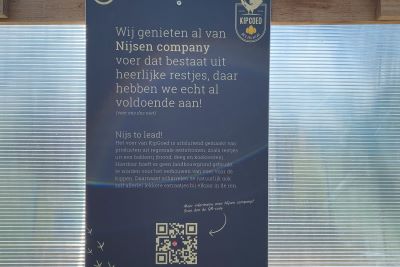
1. One of the biggest innovations they have recently adopted is to use an online database of the pigs and the pieces of meat available in the storage. It’s really useful to keep an eye on the availability of the products and to know how efficiently they used the whole pig. They can also use it to know which parts are more sold than others and change the butcher indication accordingly. 2. A second innovation is to find a way to catch the pigs when they are free in the wild. For this they use a wooden cage where they place feed inside and when pigs enter, they close them in the cage. Before catching them, they repeat the feeding process in the cage for some time so that the pigs get used to it. 3. Another innovation is that they castrate young piglets in order to keep the whole families together. In order to do that they train the sow to get fed in a far place so that when she goes to eat, they quickly castrate the piglets without her knowing it (she is so far, she doesn’t hear the piglets screaming). 4. Another innovation is that they use some special extra feed: they use waste from beer production and also some pellets made of leftovers from bread and bakery. They only feed their animals with waste from our food system, so they that there is no need to waste extra energy and land to produce animal feed.
WHY AND HOW YOU DECIDED TO INTRODUCE STRATEGY CHANGES / INNOVATIONS
1. In order to keep an updated database; 2. The cage was thought to catch the pigs in the wild; 3. They want to keep two different breeds for males (Duroc) and females (Berkshire). The males give a great taste to the meat, while the female breed has good milk production, is great in taking care of the piglets and gives a good taste to the meat as well. So, if you have the mix of these two lines you have the best piglet breed. If you would leave the piglets reproduce themselves without castrating them, you would have a mix of breed without consistency and also you wouldn’t be able to control timing and space availability. When sows are pregnant, they get different feed and also when they breast-feed the piglets, they get some extra proteins. They buy the males while the females they reproduce themselves by injecting the sperm they buy into the females. 4. The reason is to have a sustainable and circular system.
WHAT OBSTACLES DID YOU MEET
Climate aversion is something you cannot control when you have piglets outdoors: due to the heavy rains in the past two years they have lost some piglets and sows. Also, they have tried to use a lighter cage to catch the pigs from the wild, but the animals were able to break it and to remove it from its place.
EVALUATION OF THE RESULTS
Very positive evaluation of the first 4 years.
WHAT WOULD YOU DO DIFFERENT AND WHAT ARE THE PERSPECTIVES IN YOUR MIND
He wouldn’t do anything different because everything is a learning lesson. He is also very proud that they are driving only electric vehicles to transport the piglets, they are using solar panels at the farm and the next step would be to have their own storage for the meat and not only to rent it. They would grow only if they can keep high quality standards and a good price. He also wants to find a way to sell well all parts of the pigs and have zero waste. At the moment the most difficult parts to sell are pork skin and fat.
FINAL SENTENCES
General Evaluation
In general, it’s important to try to reconnect consumers in the city and producers in rural areas. It’s essential that everyone who eats meat is aware that when they buy a piece of meat an animal died for it. When you are buying you are making a choice. When you buy cheap meat, you promote a type of farming where animals are grown in a cage. So, as consumers, we all have the key to change the food systems.
Suggestions for other farmers
If you haven’t started yet: get your idea, start with it and follow it. While working at the farm, take your time to do an evaluation and check out what you can do differently to improve what you do and reach the next level.