PROJECT ON-FARM
TITLE OF THE CASE STUDY
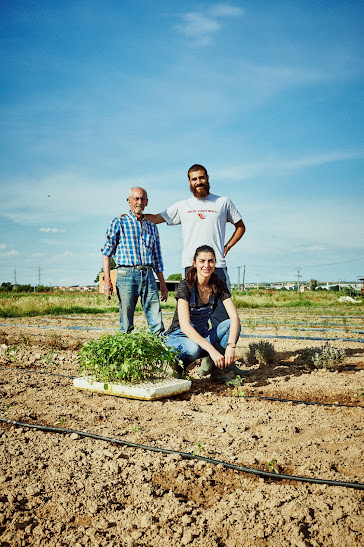
Ecodebio. Meet Natalia and Juan, young and committed farmers
MAIN DATA OF THE COMPANY
Name of the Company
Ecodebio
Country
- Spain
Type of the Company
- Family company
Farming Activity
- Cultivation
Direct selling way
- Direct selling in farm
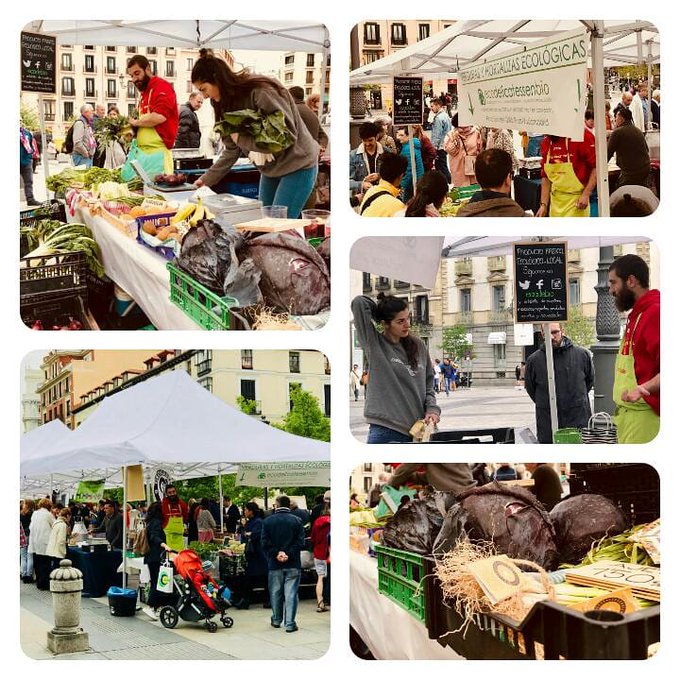
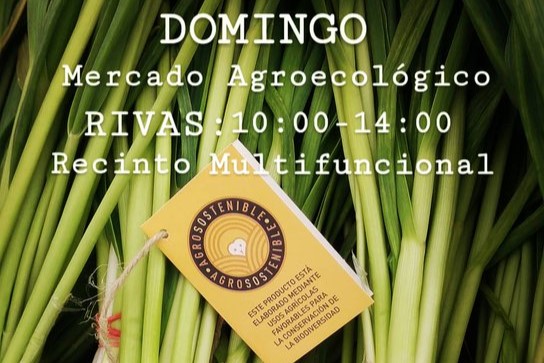
- Direct selling in farmer markets
- Online selling
SELF – INTRODUCTION OF THE FARMER
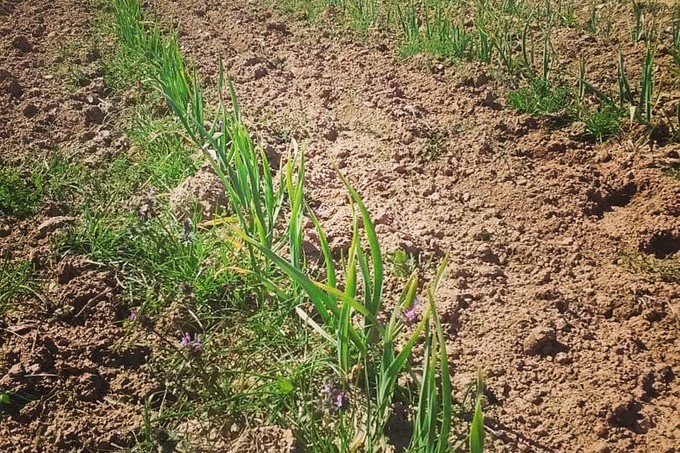
Juan and Natalia are two young producers behind the name eco de bio. They grow vegetables on a small two-hectare garden near Madrid. They have two hectares of organic land protected by the official seal of approval. The land is rented and is owned by the town council of Rivas, under a municipal initiative of cession of land to small organic producers. They make direct sales of fruit and vegetables to consumer groups, home sales and some small shops. However, if they have a large stock, part of it is sold to an organic distributor in the central market of Madrid (Mercamadrid). They are trying to avoid intermediaries because they believe that this makes organic produce very expensive and increases food waste. They only produce seasonal vegetables, do not have greenhouses and do not process their produce, although they have even sold part of their tomato harvest to a jam producer. They also sell some fruit on demand in their baskets, thanks to agreements with another organic fruit producer.
CHANGES / INNOVATIVE SOLUTIONS ADOPTED
They are always trying to introduce innovations, with new varieties of products. Every year they sow/cultivate different varieties, alternating terraces with different crops to reduce the risk of pests and diseases. Although the most recent innovation is the installation of a venturi system for fertilisation. Although they continue to work with organic fertilisation to prepare the soil, once the crop has been installed, they are committed to this technique because it is very convenient and effective. This consists of supplying nutrients to the plants through the water used for irrigation. The fertilisers are injected in liquid form together with the water to create a nutrient solution, which, thanks to the irrigation system, is dissolved next to the roots of the plants, facilitating their absorption. The Venturi suctions or sucks the fertilisers in an optimal way so that it mixes with the water inside the pipe.
WHY AND HOW YOU DECIDED TO INTRODUCE STRATEGY CHANGES / INNOVATIONS
The fertigation system was seen as essential because once the crop is installed, if you detect a need at a given moment it is very difficult to provide it in a solid form. They also take advantage of it to inject worm hummus once a week, for example. In other words, it allows you, in a very effective way, to make small contributions to the crop throughout the cycle in very precise quantities, which go directly to the crop without having to use machinery. The different varieties see this as a way of reducing risk and offering the consumer a different supply, as well as spacing out production with longer seasons.
WHAT OBSTACLES DID YOU MEET
In general, counselling, not information, is needed. But it is very difficult to access advice that guides you through different processes and is not just a communicator of information. For example, grants are very difficult. The requirements are very high, but it is very difficult to find someone to solve your doubts, neither the administration nor the agricultural organizations have the capacity to solve very specific doubts that are very important for producers. The agricultural organizations complete a general dossier, but in the case of a very specific issue neither they nor the administrations can help, because the person you present the dossier to is not the same person who later reviews it, and then errors arise that are difficult to correct. Another thing is technical advice on innovative techniques or marketing, which nobody knows anything about. Here you have to learn by trial and error, talking to many people who work in this field. The agricultural organizations were of great help here, as the forums that are created around them are very useful for sharing ideas and doubts. They had a lot of difficulties, especially with marketing, because even for technical questions about cultivation you can consult the internet or the technical staff hired by the municipality, but to develop your own marketing techniques, which depends so much on your type of farm, there is very little practical help. Sometimes you do get advice, but you have to ask a lot of questions, and of course not always from the same person or organization, which makes the cost more expensive. The courses that are useful and free, are always very long and the timetable is incompatible with the activity. They are ideal for people who want to start, but not for those who are already working. They have encountered a lot of unfair competition from wholesalers and shops. At farmers' markets they have found stalls of the shops they supply. Farmers' markets should only be farmers' markets. Also, agri-ecological markets should not allow conventional products.
EVALUATION OF THE RESULTS
They believe in this type of agriculture and when they had the opportunity, they decided to take the plunge. They have been very lucky with their colleagues, because they have managed to create a very active group, all dedicated to the vegetable garden, in which they help each other. When they made the investment, they were very clear about it, they had studied all the options and they have seen how they work. They are happy with the results, they see that the business is growing and that people are calling them from many places, but they have periods and spells, at the end of the day they have to deal with climatic disasters and rabbit attacks. They don't have much free time, because when they are not in the orchard they are selling or delivering. Little by little they start to learn how the market works. When the demand from the consumer groups is low, they take advantage of the time to attend more markets.
WHAT WOULD YOU DO DIFFERENT AND WHAT ARE THE PERSPECTIVES IN YOUR MIND
They would not do anything different; all the investments were well thought out. They would have applied for certain aids that they thought were incompatible, but after some time they realized that they were not. The rest, errors with certain varieties or with treatments, they see as part of the learning process, errors that were necessary to avoid other, more serious ones. As for the future, they are trying to come to an agreement with other producers to supply different cooperative supermarkets. These have a demand for produce that they cannot satisfy, so they are trying to reach an agreement with other producers to make a joint plan to be able to supply these supermarkets (which deal ethically with the producers) with organic produce. They also want to apply for investment aid to be able to change the whole irrigation system, to avoid losses and improve efficiency, and they want to fence off the plot, to avoid intruders, but above all to avoid a plague that at some point has caused them a lot of damage: rabbits. In Rivas the municipality is planning to suplly that the school canteens with local agro-ecological products; they are waiting for the town council to specify the formulas.
FINAL SENTENCES
General Evaluation
Organic farming is increasingly in demand, but to access it at more affordable prices it is necessary to find alternative sales systems, such as direct sales. These sales systems make it possible to recover the contact between the consumer and the producer, to get to know local varieties and seasonal calendars better, so that the products are at their optimum harvesting time, without having to spend a lot of time in the kitchen. Information on each product can come directly from the producer. They are trying to improve this communication even more. Their farm is open to visitors, because what they want is total transparency. That is why they also believe in certification seals, with soil analyses that they can present to all those who request them. In fact, although they do not ask for them, they usually carry out their own analyses to find out about fertilisation needs. They understand that there are producers who, although they are not organic, may not need the official seal and can have a certification shared with their own consumers, but they understand that it is safer if it is backed by an official body. But they also believe that in terms of support and markets, producers who are committed to official certification programmes are the ones who should be given priority. They are satisfied with the reception they are receiving and for having committed themselves to this project in which they are learning something new every day.
Suggestions for other farmers
The most important thing to know is that there are no written rules, what works elsewhere does not necessarily work for you and vice versa. You have to prepare a lot to make any kind of decision, look at alternatives, consequences, pros and cons, but ultimately no one can assure you 100% that they will work. The best thing to do is to try, always calculating the risks, doing small tests, looking at other farms or examples of how they have done it, but do not rule it out. In the case of agricultural projects, it is very important to know about similar cases in the area, as soils and climates have a great influence. Finally, it is important that they neglect the phase that comes after agriculture. It is necessary to know how to sell a product, to be very clear about the costs of production and distribution, the possible losses and the financial, climatic or health risks that exist, in order to be able to value the product and assign a price.