PROJECT ON-FARM
TITLE OF THE CASE STUDY
Discover a black Iberian breed traditional livestock
MAIN DATA OF THE COMPANY
Name of the Company
Braman
Country
- Spain
Type of the Company
- Family company
Farming Activity
- Animal breeding
- Product’s transformation on farm
Direct selling way
- Direct selling in farm
- Direct selling in farmer markets
- Online selling
SELF – INTRODUCTION OF THE FARMER
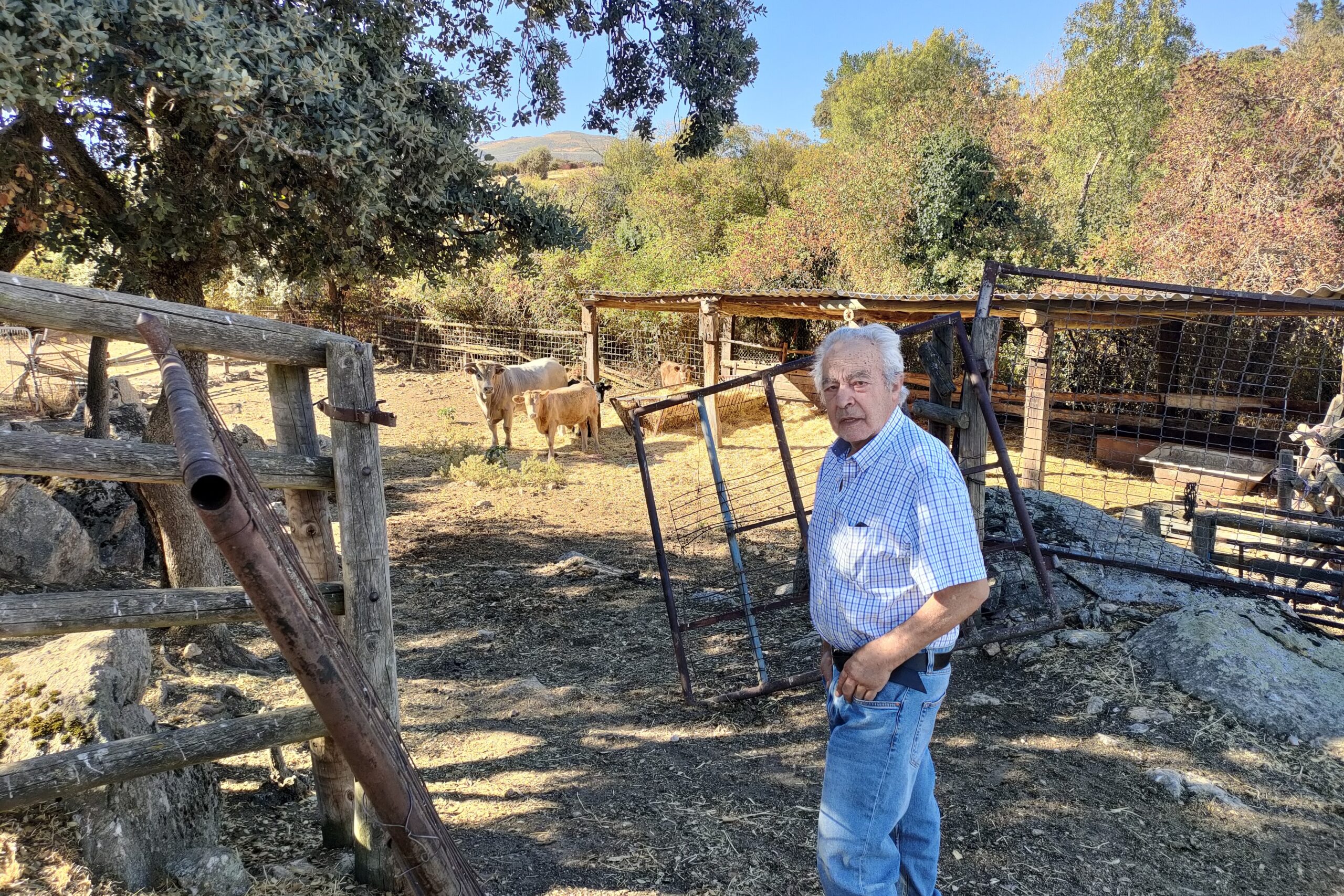
The owner, Fernando Manteca, is 74 years old, but the company is run by him and his wife. There are two employees, one full-time for butchering and delivery, and one part-time to take care of the cattle. Fernando has worked all his life on the farm, which he inherited from his parents, although it was much more modest at the time. The farm has 300 animals of the Avileña or black Iberian breed, typical of the area, and approximately 200 hectares. Slaughter is carried out in an external slaughterhouse, although the cutting is done on the farm in a cutting room. The direct sales business has been carried out since 2000.All production is sold directly to the consumer. All the animals that make up the Braman herd have been suckled by their mothers, and feed on these green pastures for between five and seven months. The feed that Fernando provides for his animals is purchased from local organic farmers, who scrupulously comply with the European Union's organic production regulations. This ensures that they are free of herbicides, synthetic chemical fertilisers or substances that cause damage to the habitat and the health of his own animals. The young calves, when separated from their mothers, are fed with fodder, organic feed and pasture for between five and nine months. And always in an environment of freedom, running around with their siblings, which results in juicy, tender meat.
More info: www.carnebraman.com and https://youtu.be/Aw6XdzQ2Kho
CHANGES / INNOVATIVE SOLUTIONS ADOPTED
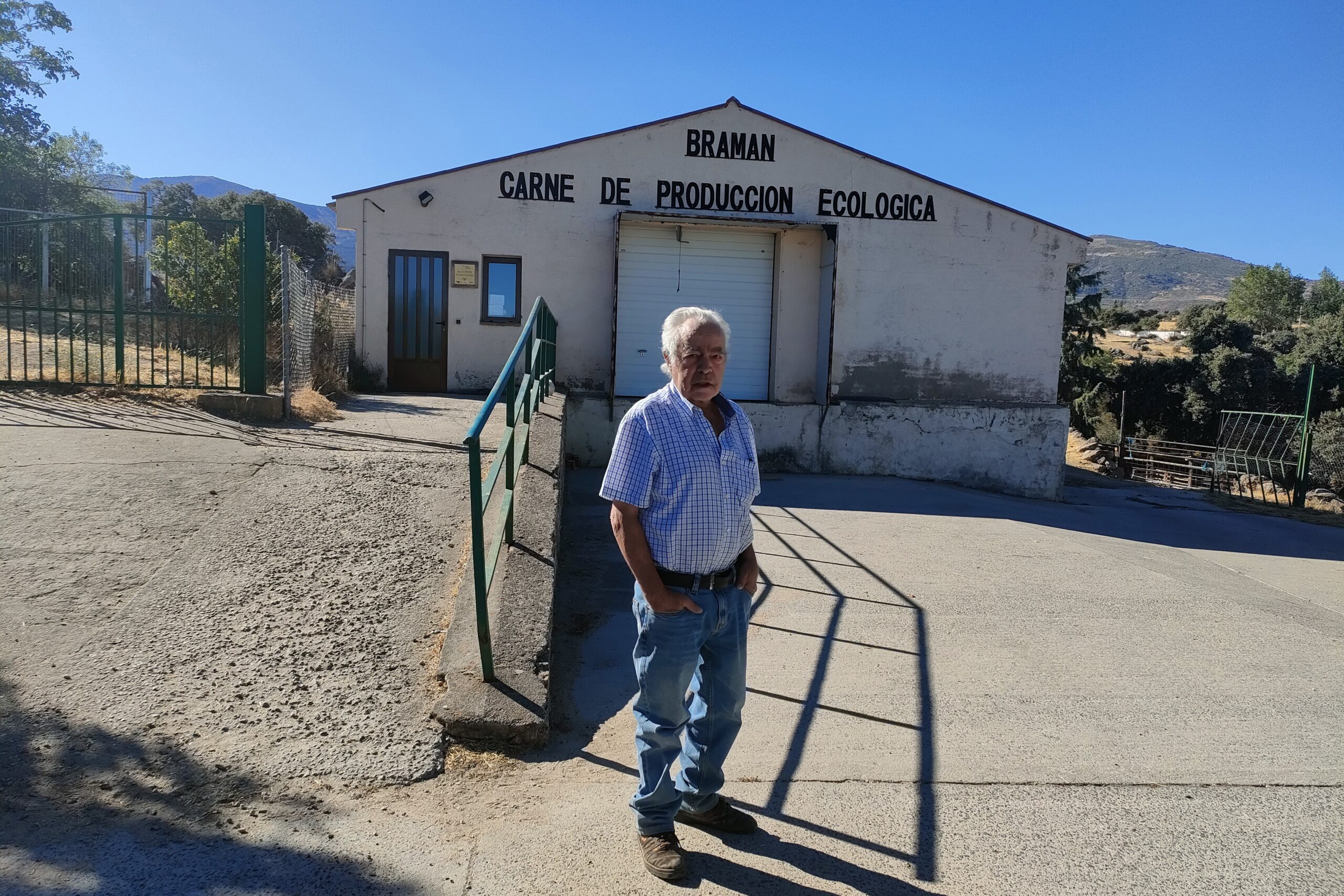
The main investment that has been made is the cutting room to fully control the quality of its products, Braman has its cutting room. This clearly differentiates Braman from other farms. The process is controlled by the Castilla y León Organic Agriculture Council. There, they also sell their meats directly. They have also bought a refrigerated truck, which allows them to deliver meat directly to consumers. All the meat is vacuum packed, to be able to sell over long distances, although more so in Madrid (their village in Segovia is about 100 km from the capital), where they have already established delivery routes. Another important investment has been the recruitment of personnel, as due to age it was difficult to maintain the same workload. Due to personal circumstances, although they have had more direct family support, this possibility is no longer open.
WHY AND HOW YOU DECIDED TO INTRODUCE STRATEGY CHANGES / INNOVATIONS
His awareness of health and the environment led him to start organic production more than 30 years ago. The beginnings were not easy, as he suffered the boycott of fellow farmers who did not like this innovation in their sector: he could not send his calves to the slaughterhouse in Segovia, which is 10 km away, as they refused to open an organic line; He had to go to the slaughterhouse in Sepúlveda, which is more than 70 km away. Little by little he managed to make his meat known mainly in Madrid through the consumer groups, as the large supermarkets were imposing unacceptable conditions. To be able to sell his meat directly, he had to invest in the cutting room and in a refrigerated truck, not to depend on large supermarkets, who offer very tight margins that force you to grow quickly to be profitable. As for the new hire, as they cannot count on family support and due to their age, they needed support to be able to carry out the heavier tasks.
WHAT OBSTACLES DID YOU MEET
He has encountered all kinds of obstacles. Rejection from farmers who rejected organic because they assumed that their meat was just as good as ours. Rejection from many butchers with whom I had worked before, because of the price involved in working in organic farming. Financial difficulties because the investments were always very expensive. We have to take into account that the cutting plant is small and that our livestock is even smaller. When working with consumer groups and consumers directly, you are faced with more fluctuations in demand. It is also difficult to organize deliveries, as there is no centralised distribution point. We have tried at some point to organize ourselves with other direct sales producers to have a logistical distribution centre, but it has been impossible.
EVALUATION OF THE RESULTS
The company is profitable. They have grown gradually from the family farm to the consumer, so they have had an easier time than others who must start from scratch. First, they started by growing, until they reached a point where they saw that their opportunity was to differentiate themselves in quality and then, seeing that sales to supermarkets were running out of margins, they opted for direct sales, fortunately. They opened many paths and have a niche and a name that is recognized throughout Spain.
WHAT WOULD YOU DO DIFFERENT AND WHAT ARE THE PERSPECTIVES IN YOUR MIND
It is very difficult not to have done things the same way. Of course, the fact that most of the farmers have disappeared is a good sign that things have been done well, even if there have been mistakes. Today there is only one other livestock farm left in his village, run by some brothers, but of course it is much bigger. If he were younger and had more strength, perhaps he would take more pasture and put more cows in, always with the same philosophy of respect for nature. Of course, offering a product directly to the consumer, of high quality and respectful of the environment is the only way to survive in such a ruthless market.
FINAL SENTENCES
General Evaluation
Things have gone relatively well, and they are satisfied. They have seen a lot of farms disappear in their area and the remaining ones have had to grow a lot to support costs and prices. They have held their own with a not so large herd and are selling all their production to consumers. They could grow more but they would have to be younger to be able to do it. They have been lucky to find employees who know how to handle the cattle on the one hand, and the cutting room on the other. The depopulation of the area is important. Without them, it would have been impossible to continue the activity.
Suggestions for other farmers
It is a very hard job that requires a lot of time and effort, and you cannot do it all at once. You must go little by little. It requires very high investments, but it is the only way to bring prices down. They grew along the chain, seeing that this was the only way to survive in a market that was imposing increasingly worse conditions on the producer and that was betting on products with greater impacts.