PROJECT ON-FARM
TITLE OF THE CASE STUDY
If Spain were an egg... Madrid would be the yolk: sustainable egg selling at El olivar de Bankiva
MAIN DATA OF THE COMPANY
Name of the Company
El olivar de Bankiva
Country
- Spain
Type of the Company
- Individual company
Farming Activity
- Animal breeding
- Product’s transformation on farm
Direct selling way
- Direct selling in farm
- Direct selling in farmer markets
- Online selling
SELF – INTRODUCTION OF THE FARMER
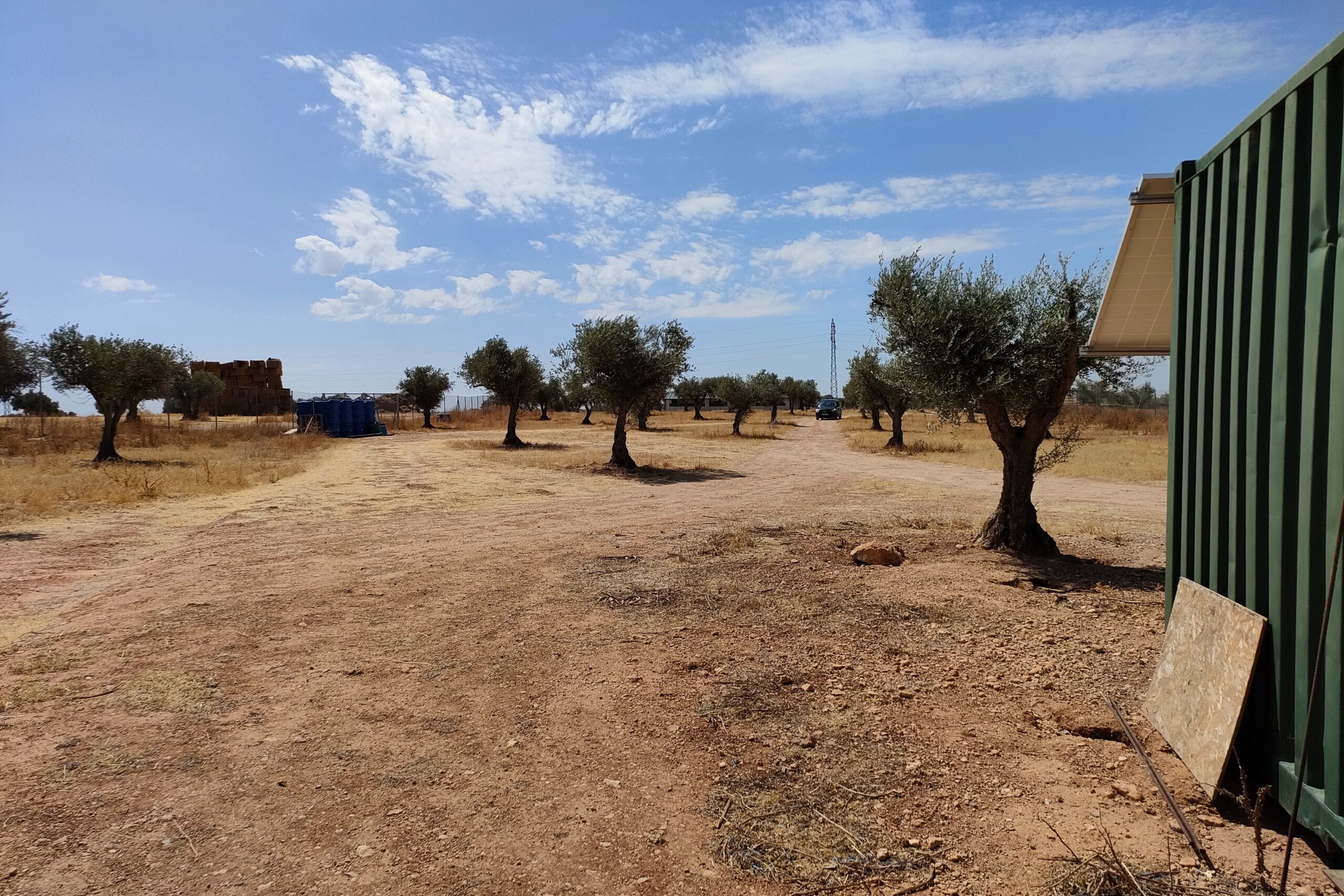
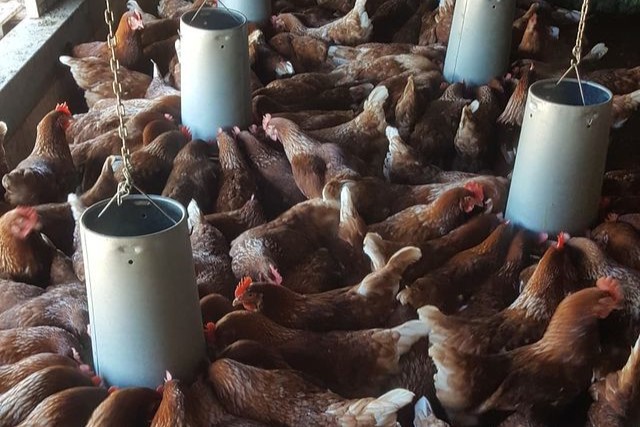
Beatriz Quero. She has been keeping laying hens for two years, despite having no previous experience. She has no employees, although some occasional help from friends. She is certified organic. She has 17 hectares, in which she has two separate sheds, 3500 and 5500 m2 with 705 hens. The main source of income is the direct sale of eggs to some herbalist shops, consumer groups and consumers, but 70% of her income come from direct sales to consumers.
CHANGES / INNOVATIVE SOLUTIONS ADOPTED
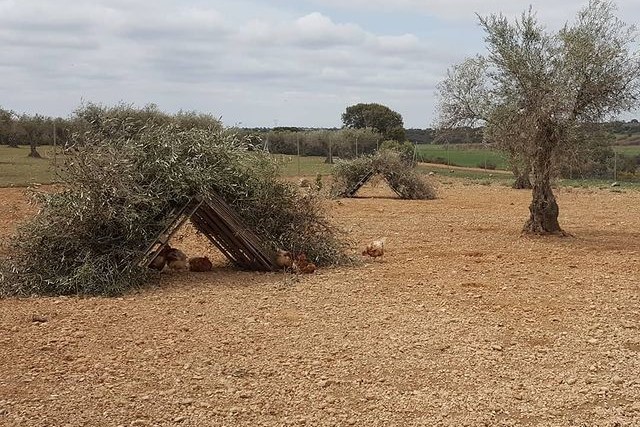
For her, everything has been innovative since she set up three years ago. Although the project was planned to be four times bigger, the farm has grown gradually. The farm started with just one shed, but this year she has added a second one. This growth was not enough for a salary. To start with, she has had to buy machinery to sort the eggs, which she packs herself. As she does not have access to electricity, the whole installation runs on solar energy from self-consumption panels. The water has to be brought in by lorry to fill large containers. The whole installation works ecologically and extensively, as she is in charge of moving the animals herself.
WHY AND HOW YOU DECIDED TO INTRODUCE STRATEGY CHANGES / INNOVATIONS
The creation of the farm came as a personal project, as his previous life had nothing to do with agriculture. All the strategies he has opted for have been purely logical. Although the project with which it was installed was different, it has had to improvise for different reasons. Perhaps the case of supplies was the clearest, bringing electricity or water was too clear, so from the beginning he knew that he had to install panels, at least for the electricity. She was clear that she wanted her farm to be respectful of the animals and the quality of the product, so she opted for organic farming, but she is disappointed by what has been allowed so far in organic farming, with practices somewhat on the limit, although she recognizes that the standards have been tightened up.
WHAT OBSTACLES DID YOU MEET
She had all kinds of problems in setting up, At the beginning of the project because he did not receive adequate advice. A supposedly specialized company made a bad installation project. The project had to be redone, but it still has some errors in the planning since then. The subsidies were not adapted to the needs of small farms. They are based on administrative deadlines and not on the needs of the farm. The requirements are often unrealistic, as they are designed for conventional farms, not for small farms. With the administration, being the first organic farm, it is very demanding and requires a lot of paperwork, especially for livestock and organic farming: reports, self-controls, etc., which require appropriate advice. Although he recognizes that in the end they have been flexible in some cases, organic certification does not look at sustainability in the best way. The problem is that the production standards are not strict enough in certain aspects of volume, density and distance, which he understands to be the essence of extensive livestock farming, although they have been tightened up somewhat. For this reason, a lot of organic production has taken place at low prices, to the detriment of more committed producers. She has also had problems with bird attacks, so he had to install a netting. Finally, he has problems with the slaughtering of animals, as the slaughterhouses do not come to pick them up because it is a very small farm with only a few animals.
EVALUATION OF THE RESULTS
The model she seeks to have is a farm that respects animals and the environment. She is managing to be profitable with her extensive farming. But it is necessary for certification systems to take more account of which systems are really the most respectful of the environment and animals. She hopes to grow organically little by little. She is happy with demand (she has sold out of her production), although she acknowledges problems in summer precisely because of holidays in consumer groups. She would like a more involved and committed consumer. She had hoped to find more cooperation with producers, as she has been very lonely. Although she belongs to a farmers' organization, the fact that she is the only farm with this type of livestock in the whole region, and moreover in organic farming, has made it difficult for her to find synergies.
WHAT WOULD YOU DO DIFFERENT AND WHAT ARE THE PERSPECTIVES IN YOUR MIND
Above all, he would have contracted another project for the installation. The consultancy firm commissioned to carry out the project showed that they did not have sufficient knowledge of poultry farming. Many parts of the project had to be redone, often by improvisation. It was very difficult to find the right technical advice. Also, the extension would have been done at a different time. The deadlines set by the administration for permits obliged him to do the work at a time that did not fit in with the production cycle and that has caused him harm. If he had done it again, he would have fought harder with the administration to get them to bring forward the signing of his file. As for the slaughtering of the animals, the sanitary criteria for investing in slaughterhouses on small farms have been relaxed, so he is studying the possibility of making one with a small turkeys farm and also sharing transport costs.
FINAL SENTENCES
General Evaluation
It has been a very hard fight. A lot of paperwork is needed, with many administrations involved: livestock, organic, health. They are not clear about the requirements and although it is true that some administrations have been flexible, it is not easy and you need good advice. She has been lucky to finally have a vet with experience in the chicken sector, which has allowed her to stay in the business. He has provided very important technical advice, but also contacts with suppliers and customers.
Suggestions for other farmers
Having the right advice. She has been lucky to have an experienced veterinarian in the hen sector who has helped her with contacts. It is also necessary for small farms to make agreements and synergies with other farms and to keep in mind that it is not only production, but also marketing can take a long time.